Programming in 2026 is surrounded by two extreme narratives.
“Everything changes. Learn agents or become obsolete.”
vs.
“It’s just autocomplete. Nothing fundamental shifts.”

Over the past two years, software development has been framed by extremes.
However, the reality is more balanced than either narrative suggests.
Some aspects of engineering have changed significantly, while others remain remarkably stable. Moreover, productivity is improving, but the real advantage has shifted from raw output to clarity, maintainability, and sound judgment.
Let’s unpack that.
1. AI-Assisted Code in Programming in 2026 Is Easy to Produce, But Still Costly to Own
What changed:
- Boilerplate and glue code are generated almost instantly
- Prototyping cycles have accelerated noticeably
- Refactors now carry less risk
- Legacy code is easier to explore using AI copilots
What hasn’t:
- Understanding systems is still difficult
- Debugging, maintenance, and security are still the dominant long-term costs
- As a result, poor code scales faster and breaks more things, more quickly
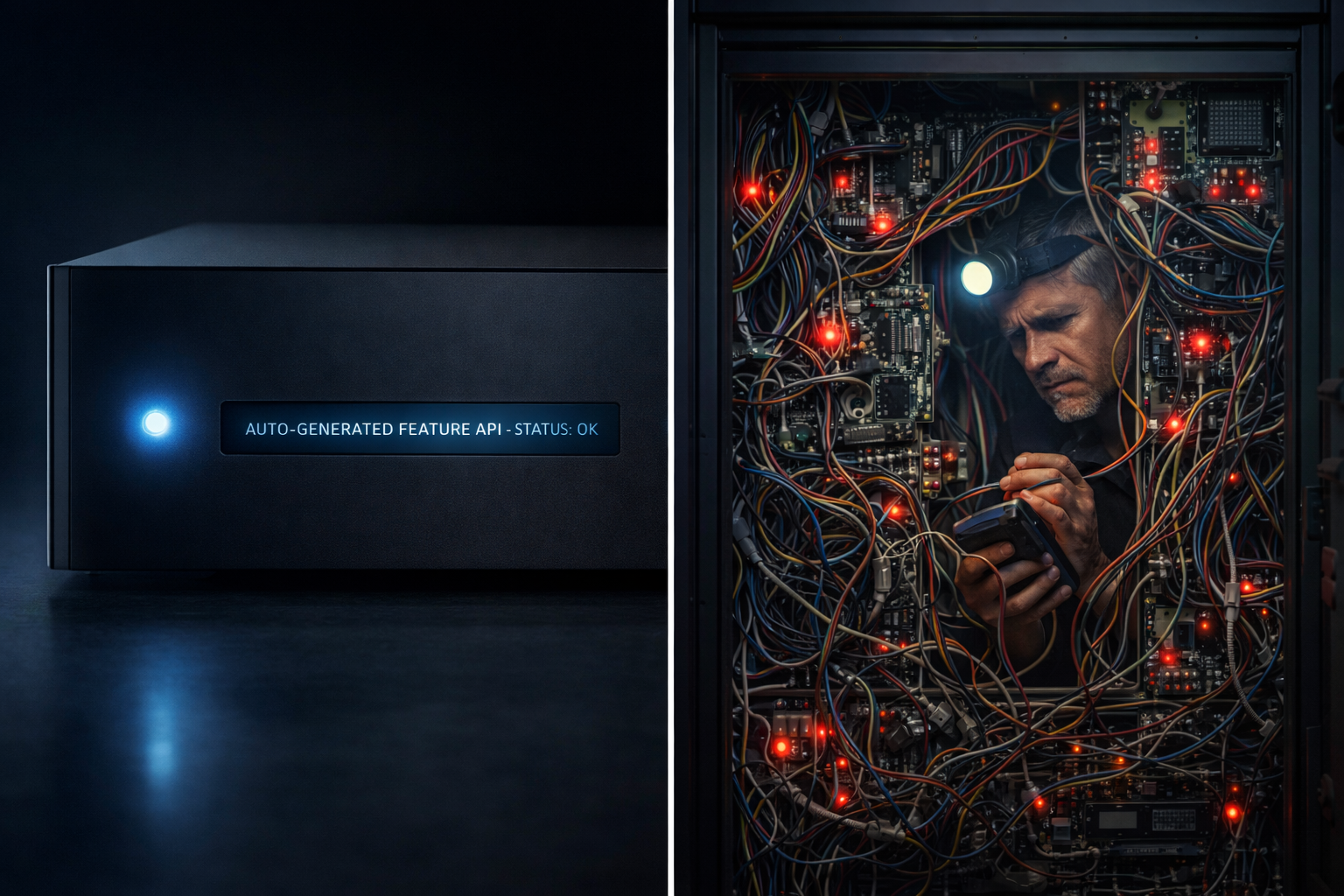
One of the defining traits of programming in 2026 is that writing code is faster, but owning it is still expensive.
Real-world vibe:
A startup used AI to ship new features rapidly. However, it paid the price with triple the time spent in production support. The problem wasn’t speed—it was unclear architecture.
Takeaway:
As a result, code generation is now expected. What matters more is the engineer who knows when to cut, clarify, and simplify.
Think of AI as a powerful code printer. Even so, clarity still depends on the humans at the keyboard.
2. Code Orchestration in Programming in 2026 Happens Mostly Behind the Scenes
What changed:
- Agent workflows are beginning to show up in mature teams
- AI pipelines quietly support QA, testing, and CI/CD
- Complex tasks can be broken into smaller, automatable pieces
What hasn’t:
- Most developers won’t be designing orchestration logic
- Orchestration is increasingly embedded inside tools
- Direct agent architecture remains niche
Micro-metaphor:
You don’t need to build the entire robot factory. You just need to understand what it’s doing and when to step in to fix or guide it.
Takeaway:
Therefore, the skill isn’t building orchestration systems from scratch. It’s recognizing when automation helps and when it hurts.
The engineers who thrive are the ones who intervene with calm precision.
In short, orchestration awareness is a key skill in programming in 2026.
3. Testing Still Matters. Evaluation Adds Power, Not a Replacement
What changed:
- Evaluation frameworks for AI-assisted code are emerging
- Human-in-the-loop testing is now common practice
- AI can help where traditional tests fall short, such as fuzzy logic or ambiguous input
What hasn’t:
- Determinism still rules in regulated or critical systems
- Reproducibility and precision are non-negotiable
- AI outputs always need a human sanity check
Helpful Link:
“Beyond Synthetic Benchmarks: Evaluating LLM Performance on Real‑World Code Generation” – arXiv (2025)
Takeaway:
Smart teams build systems with predictable cores, flexible logic where needed, and clear fallback behavior when things go wrong. In other words, there’s always a safe, expected way for the system to respond when AI outputs fall short.
Additionally, evaluation helps test what you didn’t think to test. It doesn’t replace testing itself.
4. Mental Models Win. Simpler Is Smarter
What changed:
- Prompting matured into a tactical dev skill
- Engineers are expected to understand common AI failure modes
- Trust in AI systems became a new kind of risk
What hasn’t:
- No one needs to know every tool
- There’s no “perfect” AI stack
- Mastery of frameworks isn’t the point—judgment is
Takeaway:
The best engineers carry a simple mental model.
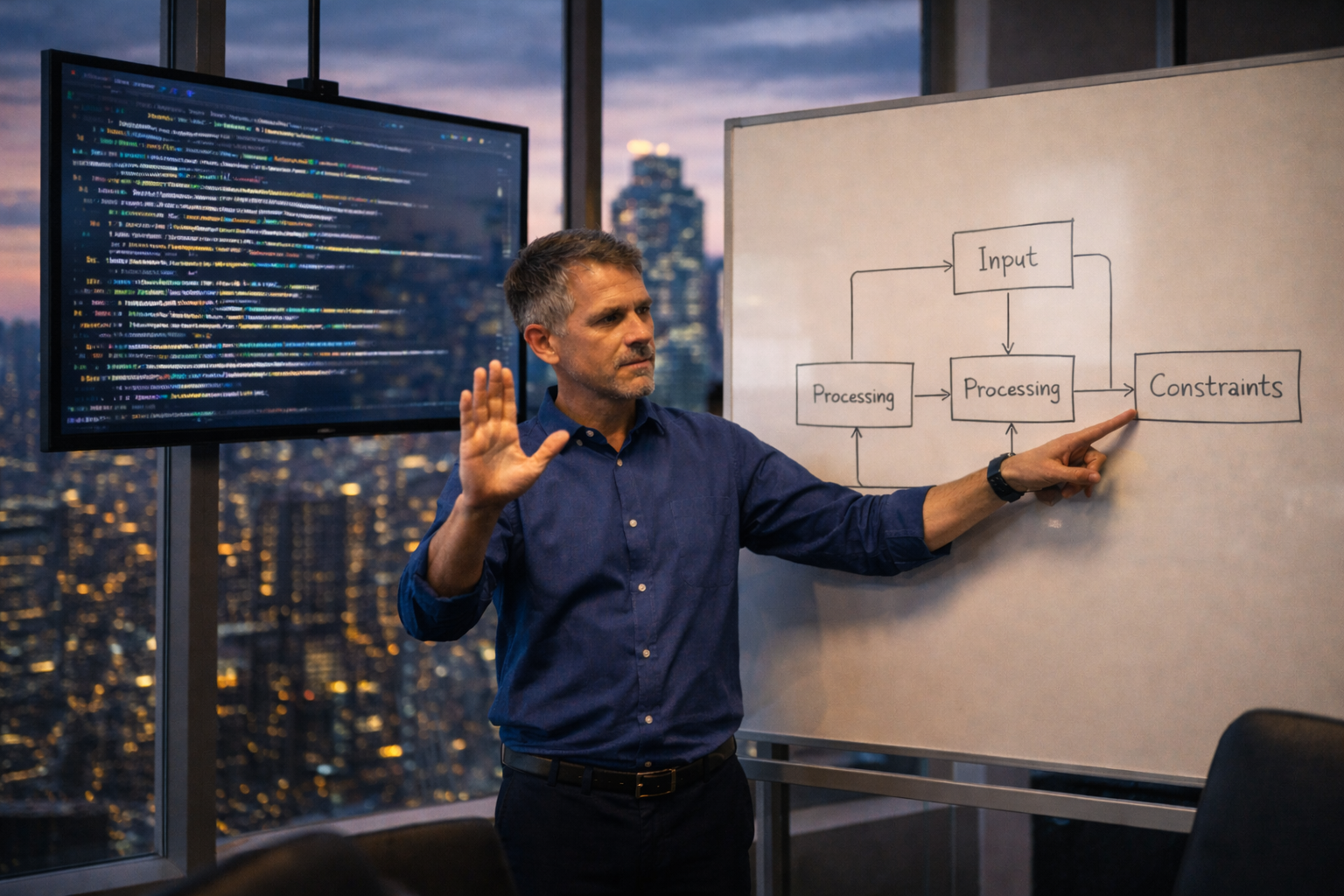
AI is fast, fallible, and sensitive to context. It amplifies clarity when well-directed and confusion when used carelessly. It doesn’t want freedom. It wants constraints.
In other words, prompting isn’t magic. It’s just design.
5. Seniority Shifts from Output to Judgment
What changed:
- Senior engineers are increasingly valued for decision quality
- Architectural framing and risk thinking matter more
- Knowing what not to automate is now a technical skill
What hasn’t:
- Experience and fundamentals still matter
- Speed doesn’t equal seniority
- You can’t fake taste or intuition at scale
Takeaway:
Ultimately, seniority in 2026 looks quieter and sharper. In fact, one of the most under-discussed shifts in programming in 2026 is how senior engineers earn influence not by output, but by architectural clarity.
The senior dev is the one who says “Let’s not automate this part yet” and explains why.
Summary: Seniority shows up in design judgment, not in raw delivery speed.
6. The Feeling of Falling Behind Is Normal. But It’s Less Useful
What changed:
- Tooling has started to settle
- AI-powered dev flows are now normal
- Learning has become more focused and intentional
What hasn’t:
- Curiosity still matters
- Change isn’t going away
- That little sense of panic still visits occasionally
Takeaway:
Consequently, the question has shifted. It’s no longer “Am I falling behind?” Instead, it’s “Is this tool making my system better?”
In summary, this reflects the kind of growth mindset that powers sustainable engineering teams.
Final Thought: Real Engineers Still Engineer
By 2026, AI is everywhere, though it rarely feels like magic.
Productivity is rising too, although unevenly across teams and domains.
Calmer, more focused, and more intentional — that’s what defines the best engineers now.
Software still needs to be modeled, built, debugged, secured, and maintained. Although AI shifts some of that, it doesn’t erase the need.
Your advantage?
- Prioritize clarity
- Understand AI limitations
- Automate carefully
- Protect maintainability
- Stay curious without panicking
To sum up, the reality of programming in 2026 is not replacement, but rebalancing. Ultimately, AI changes how code is produced, not why engineering judgment matters.