Seniors + AI · Code Review
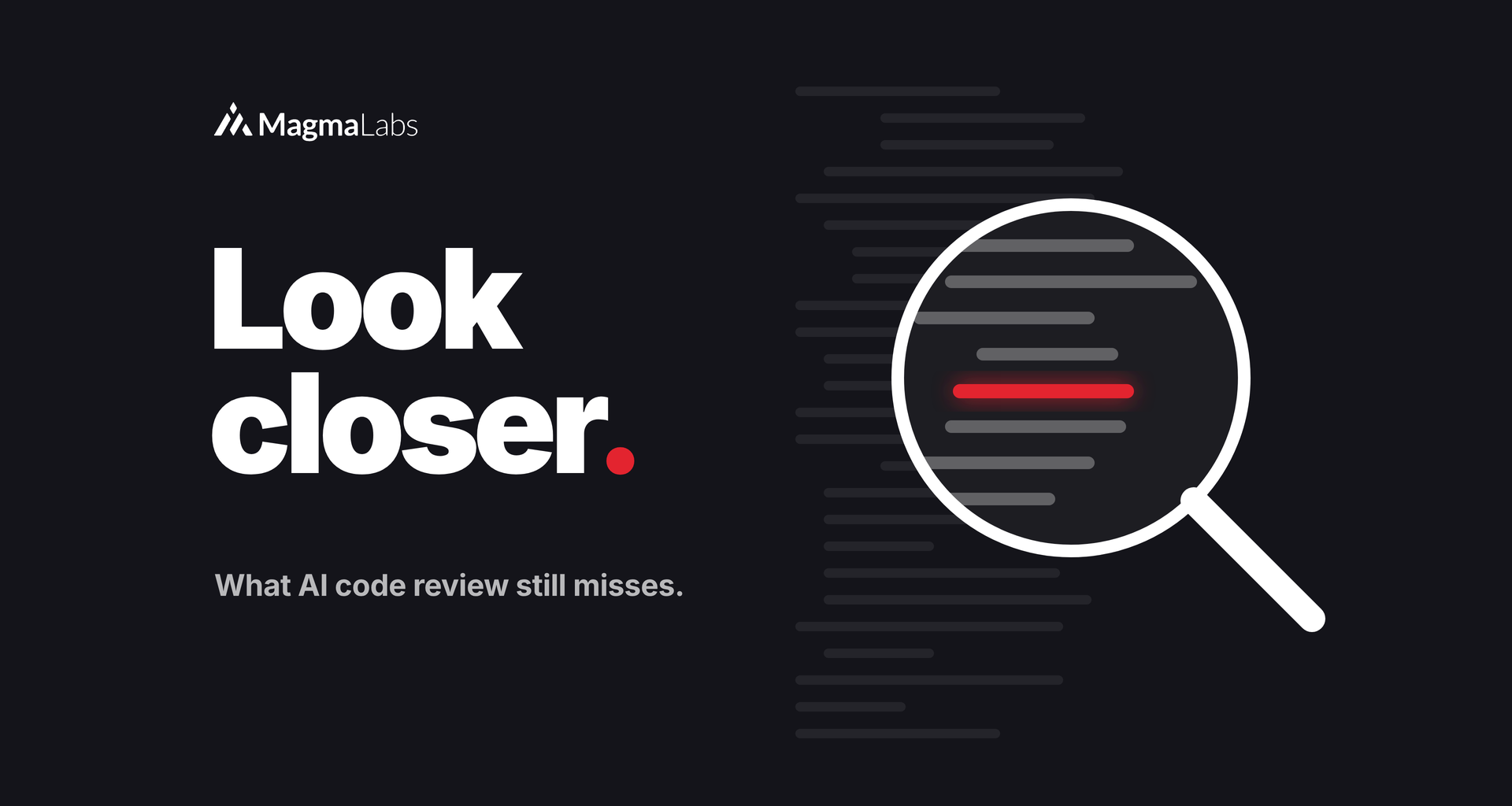
The AI reviewer approved the pull request in 40 seconds. But the bug that mattered was still in it.
Today, most teams use AI to write code and AI to review it. It’s fast, and it catches things people skim past. However, “the AI reviewed it” is not the same as “someone who knows the product reviewed it.”
AI code review is great for fast, simple checks. For example, it spots style issues, missing error handling, obvious bugs, and leaked secrets. However, it misses what needs context: business rules, access between customers, performance at scale, and design choices. So use AI as the first reviewer, and keep a senior human as the last.
What is AI code review?
AI code review is when a language model reviews a pull request. First, the tool reads the code change and some of the code around it. Then it posts its findings as comments, usually within a minute or two. Many tools also run static analyzers at the same time.
Tools like CodeRabbit, GitHub Copilot code review, and Greptile are now a default step for many teams. So the real question is how much to trust them.
What does AI code review catch, and what does it miss?
What it catches well
- Style and naming that drift from team conventions
- Missing error handling and unchecked return values
- Obvious null, empty, and boundary bugs
- Hardcoded secrets and API keys
- Duplicated or dead code in the diff
What it often misses
- Business rules that live outside the diff
- One customer reaching another customer’s data
- Performance at scale, like N+1 queries and missing indexes
- Race conditions and failures between services
- Design trade-offs made on purpose
In short, AI code review is strong when the problem sits in the changed lines. However, it’s weak when the problem depends on how the whole system works.
Why do AI reviewers miss what matters?
The data backs this up. In a 2026 study, researchers looked at 31,073 AI review comments from 239 GitHub projects. Developers accepted only 36.4% and rejected more than half. Most rejected comments were wrong, or they ignored choices the team made on purpose.
Framing matters too. In one study of 250 security fixes, calling a change bug-free cut how many flaws the AI found by 16% to 93%.
AI code review is a great first reviewer and a dangerous last one.
Shipping AI-reviewed code to real customers? Get a senior second opinion →
The code review checklist humans should still run
First, let the AI handle style and obvious bugs. Then a person who knows the product checks these six things before merging:
- Business rules. Does the change follow how the business really works, including edge cases nobody wrote down?
- Access control. Can any user reach data or actions that aren’t theirs?
- Queries and performance. Are there queries inside loops, missing indexes, or work that grows with every row?
- Failure paths. What happens when a payment, an API call, or a background job fails halfway?
- Irreversible changes. Migrations, deletions, and anything that touches money or customer data need a second look.
- The “why.” Does the change solve the right problem in a way the team can maintain?
How to use AI code review without the noise
Here’s a simple setup that keeps the signal and cuts the noise:
Also, many bugs that AI reviewers miss are the same ones AI coding tools write. For example, think of the N+1 query problem or the multi-tenancy data leak. So if AI wrote it and AI reviewed it, nobody with context has looked yet.
Your AI reviewer approved it. Will it hold in production?
Senior MagmaLabs engineers review AI-built code for what tools miss: business logic, access control, and performance at scale. Then we tell you plainly what to fix first.
Planning for growth? Read Scalability testing for AI-built apps →
Frequently asked questions
What does AI code review do?
It reads a pull request and some of the code around it. Then it posts comments about possible problems, like style issues, missing error handling, obvious bugs, and exposed secrets. Most tools reply within a minute or two.
Is AI code review reliable?
Yes for simple checks, but not as a final approval. For example, in a 2026 study of over 31,000 AI review comments, developers accepted 36.4% and rejected 56.3%. It also tends to miss business logic, access control, and performance issues.
What is the best AI for reviewing code?
There’s no single best tool for every team. Instead, test two or three tools on your own recent pull requests. Then compare how many real bugs they catch, how many comments your team accepts, and how much noise they add.
Can AI replace human code review?
Not yet. AI is a fast first reviewer, so it saves people time on style and obvious bugs. However, someone who knows the product should still approve changes to business logic, permissions, payments, and customer data.